Develop and improve products. List of Partners vendors. Scalpers seek to profit from small market movements, taking advantage of a ticker tape that never stands still. They would buy when demand set up on the bid side or sell when supply set up on the ask side, booking a profit or loss minutes later as soon as balanced conditions returned to the spread. Today, however, that methodology works less reliably in our electronic markets for three reasons.
First, the order book emptied out permanently after the flash crash because deep standing orders were targeted for destruction on that chaotic day, forcing fund managers to hold them off-market or execute them in secondary venues. Second, high-frequency trading HFT now dominates intraday transactions, generating wildly fluctuating data that undermines market depth interpretation.
Finally, the majority of trades now take place away from the exchanges in dark pools that don't report in real-time. Scalpers can meet the challenge of this era with three technical indicators custom-tuned for short-term opportunities.
Scalping Without Indicators
The signals used by these real-time tools are similar to those used for longer-term market strategies, but instead, they are applied to two-minute charts. They work best when strongly trending or strongly range-bound action controls the intraday tape; they don't work so well during periods of conflict or confusion. You'll know those conditions are in place when you're getting whipsawed into losses at a greater pace than is usually present on your typical profit-and-loss curve. Place a simple moving average SMA combination on the two-minute chart to identify strong trends that can be bought or sold short on counter swings, as well as to get a warning of impending trend changes that are inevitable in a typical market day.
This scalp trading strategy is easy to master. The ribbon will align, pointing higher or lower, during strong trends that keep prices glued to the 5- or 8-bar SMA. Penetrations into the bar SMA signal waning momentum that favors a range or reversal. The ribbon flattens out during these range swings, and price may crisscross the ribbon frequently. The scalper then watches for realignment, with ribbons turning higher or lower and spreading out, showing more space between each line.
This tiny pattern triggers the buy or sell short signal. How does the scalper know when to take profits or cut losses? The best ribbon trades set up when Stochastics turns higher from the oversold level or lower from the overbought level.
Trading With No Indicators.... or.......Naked Forex Trading
Likewise, an immediate exit is required when the indicator crosses and rolls against your position after a profitable thrust. You can time that exit more precisely by watching band interaction with price. Take profit into band penetrations because they predict that the trend will slow or reverse; scalping strategies can't afford to stick around through retracements of any sort. Also, take a timely exit if a price thrust fails to reach the band but Stochastics rolls over, which tells you to get out.
Once you're comfortable with the workflow and interaction between technical elements, feel free to adjust standard deviation higher to 4SD or lower to 2SD to account for daily changes in volatility. Better yet, superimpose the additional bands over your current chart so that you get a broader variety of signals. Finally, pull up a minute chart with no indicators to keep track of background conditions that may affect your intraday performance.
Add three lines: one for the opening print and two for the high and low of the trading range that set up in the first 45 to 90 minutes of the session. Watch for price action at those levels because they will also set up larger-scale two-minute buy or sell signals. In fact, you'll find that your greatest profits during the trading day come when scalps align with support and resistance levels on the minute, minute, or daily charts. Scalpers can no longer trust real-time market depth analysis to get the buy and sell signals they need to book multiple small profits in a typical trading day.
Fortunately, they can adapt to the modern electronic environment and use the technical indicators reviewed above that are custom-tuned to very small time frames. Corporate Finance Institute. Day Trading. Technical Analysis Basic Education. Your Privacy Rights. To change or withdraw your consent choices for Investopedia.
You will start to see the energy and momentum in the charts.
Scalping in Forex
The best traders observe small little clues that seem meaningless to others but remind the chart watcher of imminent danger and opportunity. Or remind them of previous experiences that help aid the current analysis and decision-making process.
The best traders are in rhythm with the market. The market makes impulses, corrections, then again impulse, correction, impulse, correction, etc. On and on. This is the heartbeat of the market. So if this pattern is the basic mechanism of the market, why not capitalize on it? The answer is: yes we should!
- USEFUL FOREX INDICATORS.
- Home - FX Trading Revolution | Your Free Independent Forex Source.
- central banks role in forex market.
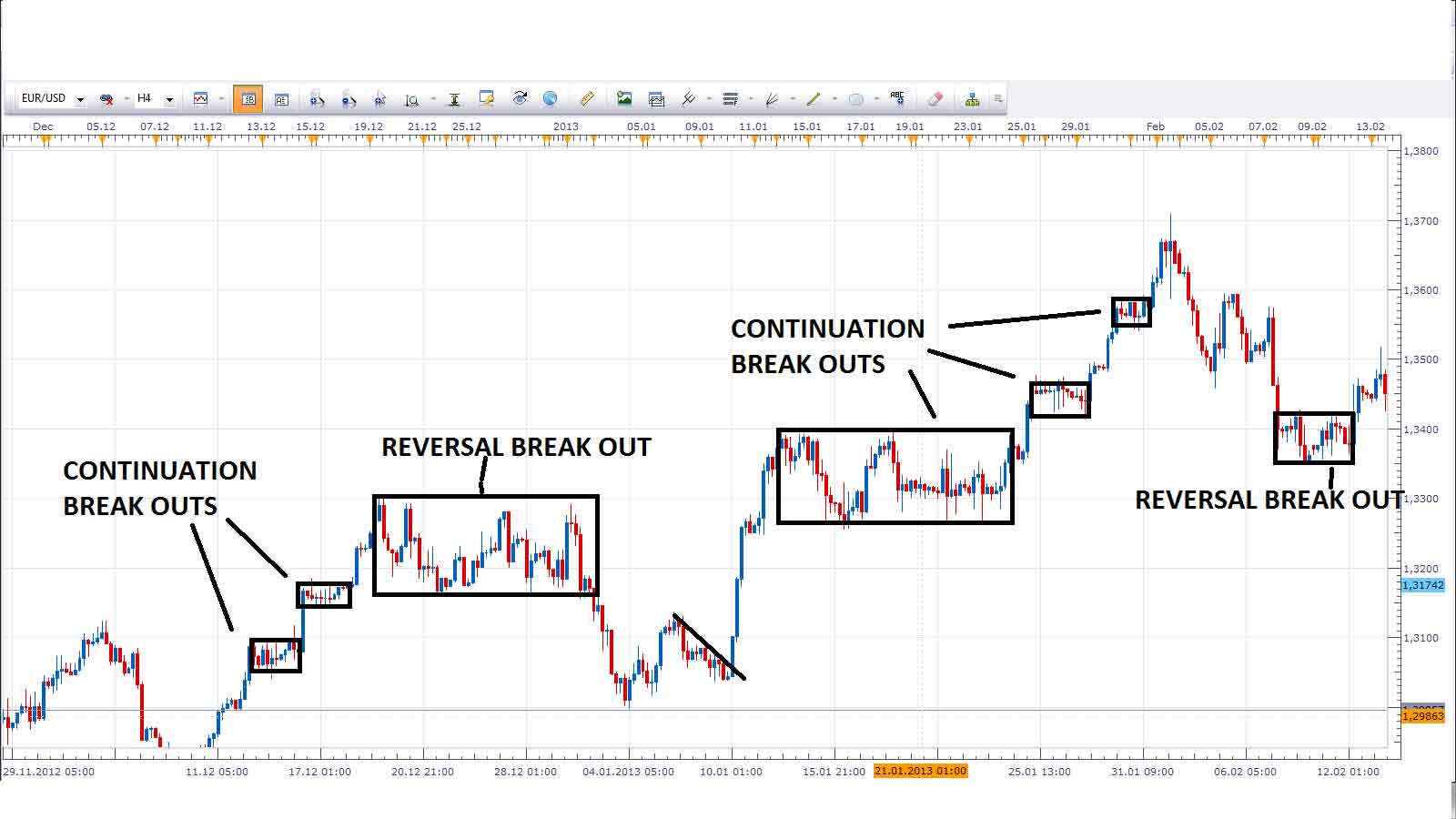
Forex trading using chart patterns and price action signals is tremendously powerful. There are a ton of links on price action at the Winners Edge Trading website so we will focus. Patterns are so great simply because they mark the start and end of a correction. But also mark the start and end of an impulse! And the impulse is the gravy of Forex trading.
Impulses are great because Forex trader reaches their profits and their take profit targets quickly without too much hassle and sideways chop. And because impulses are more easily identified and caught in trends than in ranges, Forex traders usually to focus primarily on trading trends. And that makes sense. Trends have many price action areas with impulses. That is why trading with the trend is so important to Forex traders. But in fact trading with the impulse is the real name of the games. We can use chart patterns for various reasons: a To identify consolidation zones or corrective price action.
Chart patterns help us with identifying corrective periods. That is why trading breakouts are such a great, if not the best, the method for trading using no indicators. There are tons of different chart patterns. Here is a list: a Bear flag: bear flag break is a high likelihood upside continuation trade. The uptrend is weakening, a potential downside.
The downtrend is weakening, potential upside. As you can see, there are tons of them. On any time frame. As you see in these charts, a Forex trader can accomplish a ton of analysis with just simple chart pattern recognition. Simple as that.
- Forex scalping: Ultimate Guide to Scalp trading | LiteForex.
- forex tweezer indicator.
- pak forex rates.
A triangle usually breaks in the same direction as the impulse prior to the triangle. So downside and then a triangle is usually followed by a continuation lower. Of course, it does take a trained eye to capitalize on them.
Things to consider before you start scalping forex
That is why paper trading and backtesting will always remain vital elements for the trader. We must practice, practice, practice… and then practice even more. A Forex tool that you definitely want to your disposal is the ability to capitalize on Forex chart patterns. They happen so often and so regularly that you really want to make sure you are well equipped for that.
In our room, we do use a couple of indicators , like Fibs. And you will see how we are able to identify breakouts, and how we filter out bad setups. I am going to give you some homework! See it this way: if you take this small step, then you have just proven that you are willing to do the work needed to become a Forex trader. I look forward to your posts!
We specialize in teaching traders of all skill levels how to trade stocks, options, forex, cryptocurrencies, commodities, and more. Our mission is to address the lack of good information for market traders and to simplify trading education by giving readers a detailed plan with step-by-step rules to follow. Good to see. I am big fan of naked of trading. I exclusively use trend channels and consolidation breakout with my strategy, along with major support or resistance which caused trend reversals in the past.
Indicators are fine, but to be used effectively a trader really needs to understand the math behind it and how the indicator is made. If they don't, they may not understand what type of false signals, or false positives the indicator can give. Therefore, using indicators can actually be more work! Hello Dave! Thank you for your comment! Much appreciated. I can imagine - many resources have been mentioned indeed.
The Winners Edge Trading website just has a ton of great resources to learn from.